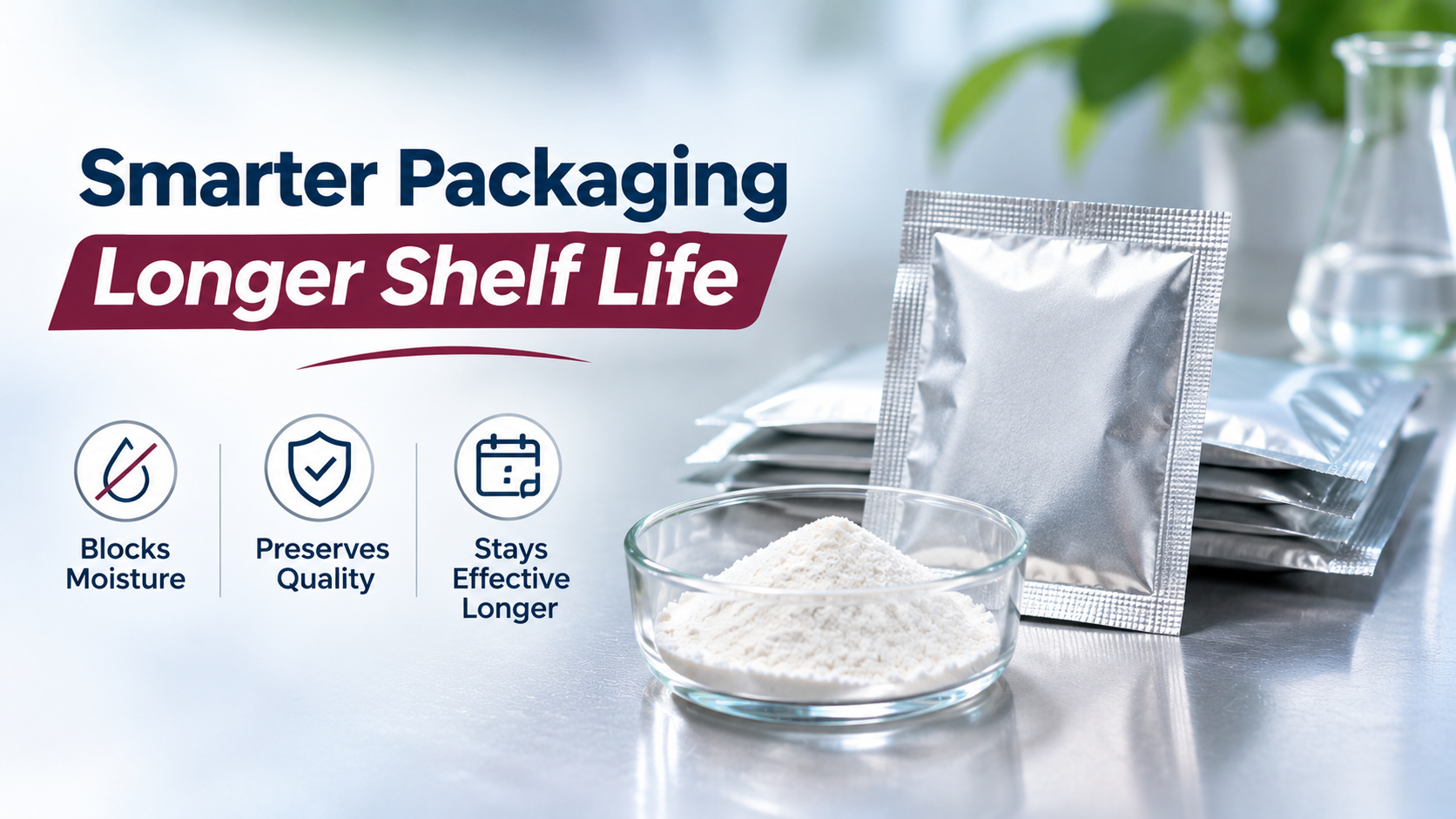
How Sachet Packaging Improves the Shelf Life of Oral Powders
A pharmaceutical powder can lose its quality long before its expiry date if it is not packaged properly. Moisture, oxygen, light, and environmental exposure can gradually affect its composition, appearance, and performance. This is where the right packaging makes a significant difference.
Sachet packaging for oral powders offers a practical way to protect individual doses from external environmental factors. By enclosing each dose in a sealed, protective package, manufacturers can reduce exposure to moisture, maintain product consistency, and support a longer, more reliable shelf life.
But how does sachet packaging work, and what makes it suitable for pharmaceutical powders? Let’s explore.
Why Is Packaging Important for Oral Powder Stability?
Oral powders often contain active pharmaceutical ingredients (APIs) and excipients that may be sensitive to environmental conditions. Exposure to moisture can cause clumping, chemical degradation, and changes in dissolution properties.
Similarly, oxygen and light may affect ingredients that are sensitive to oxidation or photodegradation.
Pharmaceutical packaging solutions help protect these formulations throughout storage, transportation, and distribution.
Without suitable packaging, manufacturers may face:
- Moisture absorption and powder caking.
- Changes in product appearance and texture.
- Reduced active ingredient stability.
- Inconsistent dissolution and reconstitution.
- Shorter usable shelf life.
5 Ways Sachet Packaging Helps Improve Oral Powder Shelf Life
1. Protects Against Moisture Exposure
Moisture is one of the major concerns for hygroscopic pharmaceutical powders. When powders absorb water vapour, they may develop lumps, lose flowability, or undergo chemical changes.
Well-designed sachets use barrier materials that limit water vapour transmission and help maintain the required internal environment.
This is particularly important for formulations containing moisture-sensitive ingredients.
2. Provides Protection Against Oxygen and Light
Some pharmaceutical ingredients are sensitive to oxygen and light. Exposure can trigger oxidation or other degradation reactions.
Aluminium foil sachets can provide strong protection against moisture, oxygen, and light when the foil layer, laminate construction, and seals are properly designed.
This makes them a suitable option for many moisture-sensitive oral powder formulations.
3. Maintains Individual Dose Integrity
Each sachet contains a predetermined quantity of powder, reducing the need to repeatedly open and handle a larger container.
This helps:
- Minimise repeated environmental exposure.
- Maintain individual dose consistency.
- Reduce handling-related contamination risks.
- Improve convenience during storage and distribution.
4. Supports Product Quality During Transportation
Pharmaceutical products may pass through different temperature and humidity conditions during transportation.
A suitable sachet structure provides a protective barrier against external environmental exposure. Proper sealing also helps prevent leakage and accidental product exposure during handling.
5. Improves Storage and Handling Convenience
Individual sachets are easy to store, transport, and distribute. Their compact format also makes them suitable for products intended for single-dose consumption.
Do You Know? The packaging material alone does not determine shelf life. The complete packaging system, including laminate layers, seal quality, filling conditions, and storage environment, influences how well a product remains protected.
Which Materials Are Used in Pharmaceutical Sachet Packaging?
The choice of packaging material depends on the formulation’s sensitivity, required barrier properties, and intended shelf life.
| Packaging Material | Key Characteristics |
|---|---|
| Aluminium foil laminate | Provides a strong barrier against moisture, oxygen, and light. |
| PET/Aluminium/PE laminate | Combines structural strength, barrier protection, and heat-sealing properties. |
| Metallised film laminate | Offers improved barrier performance compared with many conventional films. |
| Polyethylene-based films | Commonly used as sealing layers in flexible packaging structures. |
The final material selection should be based on product-specific testing rather than appearance or material composition alone.
Key Factors to Consider When Selecting Sachet Packaging
Choosing the right sachet involves more than selecting a material. Manufacturers should evaluate several technical factors.
| Factor | Why It Matters |
|---|---|
| Water Vapour Transmission Rate (WVTR) | Indicates how much water vapour can pass through the packaging material. |
| Oxygen Transmission Rate (OTR) | Measures oxygen transmission through the material. |
| Seal Integrity | Helps prevent moisture and air from entering through weak seals. |
| Material Compatibility | Reduces the risk of unwanted interaction between packaging and formulation. |
| Storage Conditions | Helps determine the required level of environmental protection. |
Pro Tip: Evaluate WVTR and OTR under clearly specified temperature and humidity conditions. Also, test the finished sachet rather than relying only on flat-film specifications. Seal performance can significantly influence actual protection.
Quick Facts About Pharmaceutical Sachet Packaging
- Individual sachets help reduce repeated product exposure.
- Aluminium foil laminates offer strong moisture and light protection.
- Heat sealing helps maintain package integrity.
- WVTR and OTR are important packaging performance indicators.
- Stability studies help establish the suitability of the selected packaging.
How Can Manufacturers Ensure Better Packaging Performance?
A reliable packaging strategy requires proper testing and quality checks at different production stages.
Manufacturers should focus on:
- Material Testing: Evaluate moisture and oxygen barrier properties.
- Seal Testing: Check for weak seals, leakage, and packaging defects.
- Compatibility Testing: Ensure packaging materials do not adversely interact with the formulation.
- Stability Studies: Assess product quality under defined long-term and accelerated storage conditions.
- Storage Monitoring: Maintain suitable temperature and humidity conditions throughout distribution.
Note: Sachet packaging alone cannot guarantee a specific shelf life. The final expiry period must be supported by stability data generated using the proposed commercial packaging system.
Final Insights: Why Sachet Packaging Matters for Oral Powders
Sachet packaging plays an important role in maintaining the quality and stability of oral powders. By providing a protective barrier against moisture, oxygen, and light, suitable packaging helps reduce environmental exposure and preserve product integrity.
Key Takeaways
- Sachets provide individual protection for oral powder doses.
- High-barrier laminates help minimize moisture and oxygen exposure.
- Proper sealing is essential for maintaining package integrity.
- Material selection should consider WVTR, OTR, and formulation compatibility.
- Stability testing determines whether the packaging supports the intended shelf life.
FAQs
1. Why are sachets commonly used for oral powder packaging?
Sachets offer individual-dose packaging, convenient handling, and protection against environmental exposure. Suitable barrier materials also help maintain powder quality during storage and distribution.
2. Which sachet material is best for moisture-sensitive oral powders?
Aluminium foil laminates are commonly considered for moisture-sensitive formulations because of their strong barrier properties. However, the final selection depends on the product’s stability requirements and packaging validation.
3. How does sachet packaging help extend pharmaceutical shelf life?
Suitable sachet packaging limits exposure to moisture, oxygen, and light. Combined with proper sealing, compatible materials, and validated storage conditions, it helps maintain product quality throughout the established shelf life.
For more information about pharmaceutical manufacturing and related solutions, explore Unicure Remedies.